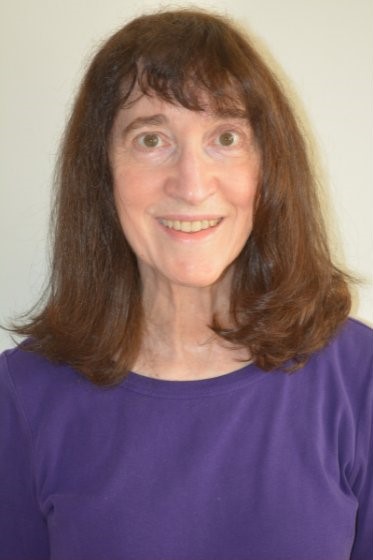
Marlies Gerber, Professor of Mathematics in the College of Arts and Sciences at Indiana University Bloomington, has been selected as a speaker at the International Congress of Mathematicians (ICM), one of the world’s most prestigious gatherings of experts, set for July 2026 in Philadelphia.
Marlies Gerber, Professor of Mathematics in the College of Arts and Sciences at Indiana University Bloomington, has been selected as a speaker at the International Congress of Mathematicians (ICM), one of the world’s most prestigious gatherings of experts, set for July 2026 in Philadelphia.
Gerber will speak in the Congress’s logic section, with her longtime collaborator, Professor Philipp Kunde of Oregon State University. Their joint talk will highlight groundbreaking research on how certain complex mathematical systems can, or in some cases cannot, be sorted into categories, a question first posed by the renowned mathematician John von Neumann in 1932.
Being invited to speak at the ICM is a major recognition. Held every four years, the Congress is widely regarded as the most important global event in mathematics. Invitations are reserved for work that has reshaped a field or opened exciting new directions.
Professor Gerber’s work sits at the intersection of ergodic theory, the study of how systems behave over long periods of time, such as tracking the motion of planets or the flow of fluids, and mathematical logic, which explores what can be known or decided using rules and reasoning. By connecting these areas, she provides new insights into what is known in the field of descriptive set theory, a branch of mathematics that looks at how complicated it is to describe or categorize collections of objects or systems, and she clarifies the limits of what mathematics itself can determine.
While her research is highly theoretical, it has important implications for science, discovery, and understanding complexity. For example, many areas of science, from physics to computer algorithms, rely on being able to sort processes into categories and predict their behavior. Gerber’s work shows that some systems are inherently too complex to be fully classified or predicted. Knowing where predictability ends helps scientists and engineers design better models, avoid overconfidence in predictions, and focus efforts where meaningful insights are possible.
At its core, Gerber’s research investigates whether there is a step-by-step way to determine when two complicated mathematical systems that evolve over time are essentially “the same.” These systems are abstract, defined by rules and complex processes that unfold according to fixed patterns. Mathematicians thus ask: Can we find a method to decide if one system can be transformed so it behaves exactly like another? For some well-studied collections of systems that can be precisely described in a regular way, the answer is yes. For the types of systems Gerber studies, however, no method will ever work in all cases, no matter how hard one may try.
Over the decades, mathematicians have solved parts of this problem for specific systems. For example, in 1970, Stanford mathematician Donald Ornstein showed that a class of systems called Bernoulli shifts—which behave in a very random way, but according to simple rules—can be sorted using a concept called entropy, which measures the average uncertainty or unpredictability.
Earlier, in 1942, IU’s Paul Halmos, a mathematician and probabilist, working with von Neumann, showed that systems with discrete spectra, which are systems with certain repeating, predictable patterns, could be classified using the system’s patterns. But in 2011, mathematicians Matthew Foreman, Daniel Rudolph, and Benjamin Weiss proved that for the most general systems, no step-by-step method can decide if two systems are really the same.
Building on this work, Gerber and Kunde studied K-automorphisms, a type of system that is more general than Bernoulli shifts but still structured enough to study. They showed that these systems cannot be fully sorted or classified using any step-by-step procedure. In addition, they showed the same is true for zero-entropy mixing systems. Mixing systems are ones in which the evolution of any collection of initial states is nearly uniformly distributed throughout the space, much as ingredients in a recipe may be mixed together by stirring, but the zero-entropy condition implies that this happens very slowly.
“Gerber and Kunde’s research shows that certain kinds of mathematical systems, called K-automorphisms, are far too complex to be neatly classified or listed,” said Christopher Connell, Professor and Chair of the Department of Mathematics. “Their work highlights just how intricate and unpredictable some patterns in mathematics can be, and leads directly to some exciting applications in mathematical logic: the study of how reasoning and rules work in mathematics.”
The implication of Gerber’s research extends to how we understand the boundaries of knowledge and prediction. For example, it informs mathematics by highlighting the limits of reasoning and classification. Further, it informs science more broadly by showing where uncertainty is unavoidable, guiding how we approach complex systems in the real world.
Gerber joined IU after earning her Ph.D. in mathematics at the University of California, Berkeley, and completing a National Science Foundation Postdoctoral Fellowship at the University of Maryland. She specializes in geometry and dynamical systems, and she teaches a variety of courses in analysis, geometry, and probability.
https://news.iu.edu/college/live/news/47754-iu-professor-selected-to-speak-at-2026 The College of Arts